Author: aslocal

Maternal care deserts are areas with a lack of access to essential maternal healthcare services, such as:

  • Prenatal care
  • Labor and delivery services
  • Postpartum care

Due to the lack of available care, women face considerable challenges in accessing timely, adequate care. This can lead to adverse health outcomes both for the mothers and the infants.

Limited Access to Health Facilities

Maternal care deserts have few or no hospitals, clinics, or healthcare providers offering maternal health services. Women living in these areas must travel long distances to reach facilities and receive care.

Shortage of Healthcare Professionals

There is a shortage of obstetricians, gynecologists, and other maternal care providers in these areas, leading to care delays and overburdened existing providers.

Lack of Specialized Care

For some areas, even when access to basic care is available, access to specialized care is limited. This can include care for high-risk pregnancies or complications during childbirth.

Higher Rates of Maternal and Infant Mortality

Due to inadequate access to care, maternal healthcare deserts often have higher rates of maternal and infant mortality and morbidity. Women in these areas are more likely to experience complications during pregnancy and childbirth.

Health Disparities

Maternal healthcare deserts exacerbate existing health disparities, particularly affecting low-income women, women of color, and those in rural communities. This contributes to overall poorer health outcomes and can perpetuate cycles of poverty and ill health.

Addressing the issue of maternal healthcare deserts involves a multifaceted approach, including increasing the number of healthcare providers in underserved areas, improving transportation and infrastructure, expanding telehealth services, enhancing healthcare coverage, and addressing social determinants of health.

Several organizations, government agencies, and initiatives are working to address maternal health care deserts. Their efforts aim to improve access to maternal health services and reduce disparities in maternal and infant health outcomes.

Government Agencies:

  • Health Resources and Services Administration (HRSA): HRSA runs programs aimed at improving access to health care in rural and underserved areas, including the Maternal and Child Health Bureau, which supports maternal and child health services.
  • Centers for Medicare & Medicaid Services (CMS): CMS provides funding and policy guidance to improve maternal health care access and quality through programs like Medicaid and the Children’s Health Insurance Program (CHIP).
  • National Health Service Corps (NHSC): This program provides scholarships and loan repayment to health care providers who commit to working in underserved areas, including maternal health care providers.

Nonprofit Organizations:

  • March of Dimes: This organization advocates for policies that improve maternal and infant health, funds research, and provides resources to support mothers and babies in underserved areas.
  • Every Mother Counts: Founded by Christy Turlington Burns, this nonprofit works to make pregnancy and childbirth safe for every mother, everywhere, by supporting programs that improve access to essential maternity care.
  • Black Mamas Matter Alliance (BMMA): BMMA focuses on improving maternal health outcomes for Black women through advocacy, research, and support for community-based organizations.

Community Health Initiatives:

Telehealth Initiatives:

  • Project ECHO (Extension for Community Healthcare Outcomes): This model uses telehealth to connect primary care providers in rural and underserved areas with specialists, including maternal health experts, to improve care delivery.
  • Telehealth Resource Centers: Funded by HRSA, these centers support the expansion and implementation of telehealth services, which can be particularly beneficial for prenatal and maternal health care in remote areas.

Policy and Advocacy Efforts:

Advancements in ultrasound reporting and telehealth play a crucial role in enhancing access to quality care and improving health outcomes for mothers and infants. These technologies facilitate remote consultations, prenatal care monitoring, and emergency support and leverage data analytics to identify trends, predict high-risk pregnancies, and allocate resources effectively.

By adopting these strategies and leveraging the efforts of government agencies, nonprofit organizations, community health initiatives, and technological advancements, we can make significant strides in closing the gap in maternal health care and ensuring that all women receive the care they need for healthy pregnancies and childbirths.

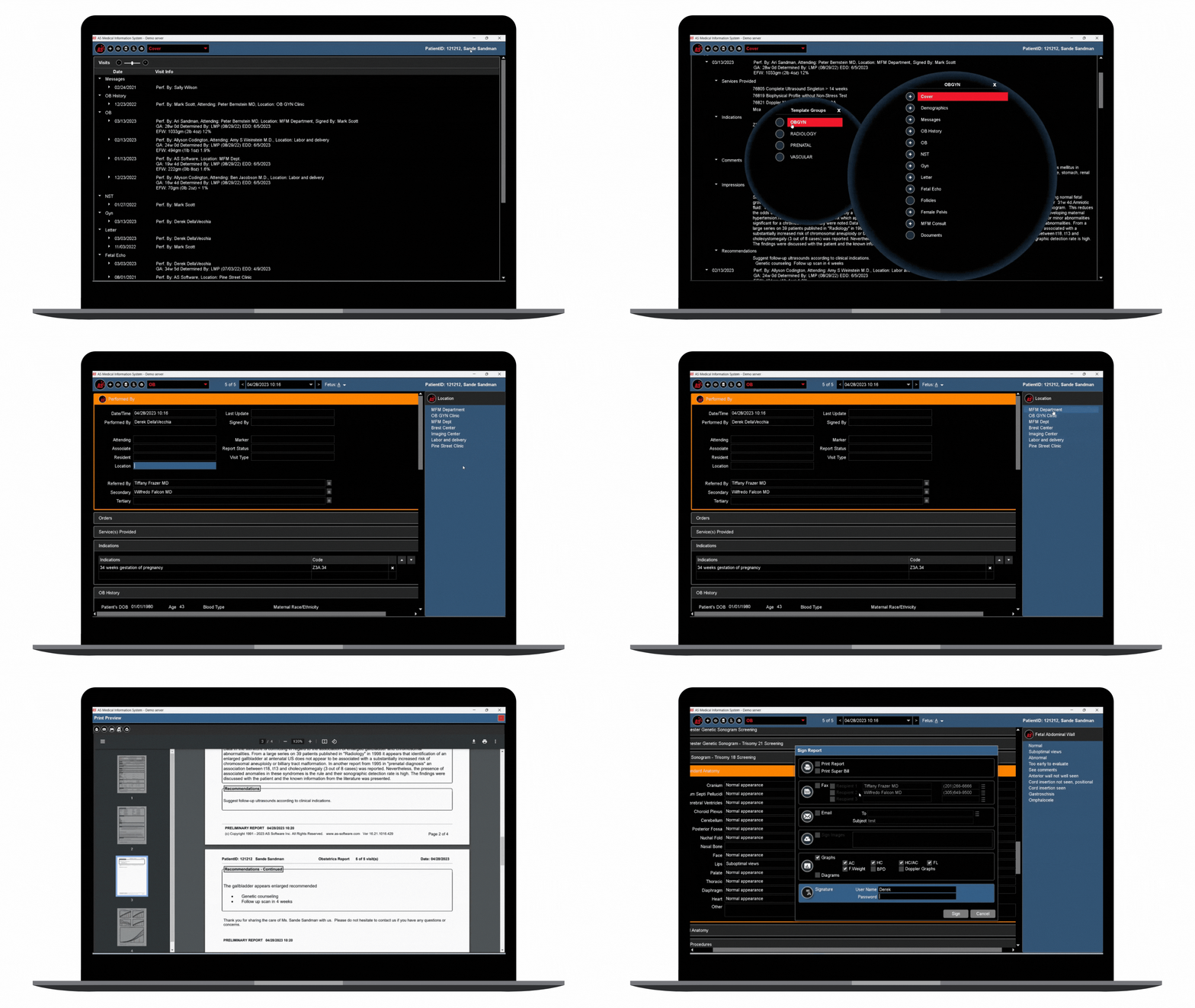
Watch the quick demo and discover how to:

Access patient records without moving between systems

  • Get a birds-eye view of the complete patient history and access from anywhere, anytime through your web browser.

Automate your workflow with built-in templates and guided auto-fill

  • Document with the level of detail that fits your clinical specialty and use the power of auto-fill to chart by exception, completing a comprehensive report in as little as two clicks.

Sign your report and close the loop with your billing and EHR systems automatically

  • Ensure speed and accuracy, plus standardize information + terminology throughout the entire system with unlimited customization.

  • In 2023, the scale of healthcare data breaches reached unprecedented levels. According to the latest HIPAA Journal analysis, a record 133 million individuals were compromised. This represents a 156% increase from 2022. (Forbes)
  • Ransomware attacks aren’t just hampering operations and costing money. They’re affecting patient care. A Ponemon survey found 45% of health IT pros reported complications from medical procedures due to ransomware attacks, up from 36% in 2021. (Chief Healthcare Executive)

A ransomware attack is a type of cyberattack in which malicious software is used to encrypt files or lock computer systems, rendering them inaccessible to users.

Ransomware attacks can cause significant disruption to organizations and individuals, resulting in data loss, financial losses, and reputational damage. 

“Cyber criminals are remotely launching ransomware attacks against U.S. hospitals, medical research laboratories, and other critical infrastructure— creating a direct threat to public health and safety; an example of how cyber criminals have become more sophisticated that’s extremely troubling for hospitals, is that hackers now specifically target medical devices, not only networks, servers, PCs, databases, and medical records.” (U.S. Department of Health and Human Services) 

“Cybersecurity analysts say ransomware groups are targeting hospitals because they know that many will pay to get their systems restored. And patient records are valuable on the dark web.” (Chief Healthcare Executive).

Healthcare organizations are common targets for ransomware attacks because they hold valuable information, like patient records, and losing access to this data can seriously disrupt patient care.

When attacked, they’re under pressure to quickly restore access due to the urgent need for medical information, and failing to do so can lead to regulatory fines. Plus, many hospitals lack the resources to defend against sophisticated cyberattacks, making them vulnerable.

Some have insurance that covers ransom payments, which inadvertently encourages attackers to target them. So, it’s a combination of the valuable data, urgency, regulatory obligations, limited defenses, and insurance that makes healthcare organizations a prime target for ransomware.

Ransomware typically spreads through email phishing campaigns, malicious attachments, compromised websites, or the exploitation of software vulnerabilities.  Email phishing is the most prevalent point of compromise, followed by spear-phishing (highly targeted phishing) and SMS phishing (via text message). (2023 HIMSS Healthcare Cybersecurity Survey)

It only takes one successful phishing attempt to cause a significant security incident. A successful phishing attack can lead to the leaking of sensitive, proprietary, or confidential information, a malware infection, or other types of security compromises (e.g., manipulation of data, credential theft, business email compromise, breaches, and others).

Once a system is infected, the ransomware encrypts files or locks the entire system, often displaying a ransom note informing the victim of the attack and providing instructions on how to pay the ransom.  

Mitigating the risk of malware takes a multifaceted security approach. At AS Software, we take these steps to safeguard customer data and help prevent ransomware damage: 

1. Protecting Your Perimeter 

Traffic to the environment is restricted to only known and approved ports and protocols. These ports can only be accessed from known IP addresses.  

2. Host-Based Intrusion Detection  

All access attempts are scanned with a host-based intrusion detection and prevention system, which flags and automatically bans any suspicious traffic. 

3. Antivirus Program 

All system files are scanned with an antivirus program. The program is updated frequently as new virus definitions are made available. 

4. Development Training 

Our software engineers undergo secure development training, focused around the OWASP top 10 — a standard awareness document globally representing the most critical security risks to web applications. 

5. Weekly Vulnerability Scans 

All source code is continuously scanned for vulnerabilities and insecure patterns, both externally and internally. Third-party penetration tests are also conducted. 

These strategies ensure protection against ransomware and prevent damage to customer networks that would delay care and put patient data at risk.  

Healthcare organizations must implement robust cybersecurity measures, including regular updates, employee training, network segmentation, data backup procedures, encryption, and access controls to mitigate the risks posed by malware attacks and protect sensitive patient data within all their systems.   

“The key is being proactive rather than playing catch-up after an incident. Make security the backbone of everything from software development to remote access policies. With innovative partners and a prevention-first mentality, healthcare organizations can regain control of their cybersecurity.” (Forbes)

To learn more about how AS Software offers a secure solution for your ultrasound workflows, schedule a demo.

When seeking approval on a new software solution to improve operational, financial, or clinical outcomes, a business case can help you gain executive support and guide your healthcare organization through the process of selecting, adopting, and adapting to proposed new technologies.

Quote

“A well-thought-out business case offers an opportunity for clinicians to bring about evidenced-based change in clinical practice. It is a powerful tool that can have a significant impact on healthcare services and patient outcomes … the role of a business case is to justify the need for change, argue its value, gain support from leadership, and illustrate how it can be sustainably implemented.”
British Journal of Hospital Medicine

A business case is a comprehensive document that outlines the justification for undertaking a particular project, purchase, initiative, or change within an organization. It serves as a tool for better decision-making, providing a structured and evidence-based rationale for investing resources, time, and effort.

Your business case should clearly communicate the potential benefits, risks, and costs associated with the proposed action, enabling stakeholders and decision-makers to make informed decisions.

Free Business Case Template
Need inspiration to get started? Use this template + examples for your new software justification.

Download for Free
components of a business case

  • Engage key stakeholders and help them see the importance of the opportunity.
  • Help decision-makers understand why the chosen solution is superior and establish a framework for ongoing performance measurement.
  • Demonstrate financial implications and advantages.
  • Provide information on potential challenges and how they will be addressed throughout implementation and beyond.

“Nearly 80% of doctors have experienced a distressing patient event in the last year, and many go on to suffer from depression, anxiety, and PTSD.” (AAMC)

Physicians face a unique set of challenges that can take a toll on their mental and physical health. Due to the nature of their profession, they are likely to experience traumatic and distressing events, sometimes daily.  

Quote

“Exposure to traumatic events is an unavoidable part of medical practice. From the beginning of medical education when students first lay eyes on cadavers through their later years as seasoned physicians, the very nature of medicine is to come closer to death and serious injury than the rest of society. Physicians also experience traumatic events such as workplace violence at rates higher than most occupations. When natural and man-made disasters occur, hospitals and physicians bear the brunt of caring for those injured and sickened.”

Physician Mental Health and Well-Being

And according to the Journal of Patient Safety, a majority of providers involved in adverse clinical events suffer from troubling memories, experiencing anxiety, anger, remorse and distress. (AAMC) 

In addition to the exposure to traumatic events that can cause PTSD and increased stress, the pressure and demanding nature of medical practice contribute to burnout. Long hours, high patient volumes, and administrative burdens are further exacerbating the mental health challenges faced by healthcare professionals. 

“A record 93% of surveyed physicians say they feel burned out on a regular basis, 49% say their workload has become unsustainable, and only 38% say they believe their practice is on solid financial footing.” (athenahealth) 

Physicians may downplay their emotional responses to distressing situations, leading to underreporting of trauma-related symptoms. This normalization can perpetuate a culture of silence around mental health issues and prevent individuals from seeking help. 

In response to these challenges, it’s essential for healthcare institutions to prioritize the implementation of comprehensive strategies aimed at supporting the mental health of their physicians.  

By addressing the root causes of traumatic stress and job-related stressors, and taking steps to support physicians and promote well-being, hospitals can create a supportive environment that fosters resilience, reduces burnout, and promotes the overall well-being of their medical professionals. 

“The issuing of measures to reduce traumatic stress symptoms is a chance for hospitals to promote mental health, work ability and commitment to the company by their employed physicians. Further programs to reduce job-related stress, especially constant work interruptions, could be an additional improvement for the physicians’ mental health.” (BMC Psychiatry.) 

Cognitive, behavioral, and mindfulness-based approaches are effective in reducing stress in medical students and practicing physicians. There is emerging evidence that these models may also contribute to lower levels of burnout in physicians. (The Journal of Nervous and Mental Disease) 

Cognitive Interventions

Cognitive interventions focus on identifying and changing dysfunctional thought patterns and beliefs that contribute to anxiety and burnout. This approach is based on cognitive-behavioral therapy (CBT) principles. For physicians, cognitive interventions might involve challenging unrealistic expectations, perfectionism, catastrophizing thoughts, and other cognitive distortions common in high-stress environments. By teaching medical professionals to recognize and reframe negative thoughts, cognitive interventions aim to reduce anxiety and prevent burnout by promoting more adaptive coping strategies. 

Behavioral Interventions 

Behavioral interventions target specific behaviors that contribute to anxiety and burnout among physicians. These interventions might include strategies such as time management techniques, relaxation training, assertiveness training, and boundary-setting skills. By teaching physicians to manage their behaviors more effectively, interventions can help reduce stressors, increase resilience, and improve overall well-being. 

Mindfulness Interventions 

Mindfulness interventions involve cultivating present-moment awareness and non-judgmental acceptance of one’s thoughts, feelings, and bodily sensations. Practices such as mindfulness meditation, mindful breathing, body scans, and mindful movement are commonly used in these interventions. Mindfulness has been shown to reduce anxiety, improve emotional regulation, enhance resilience to stress, and decrease burnout among medical professionals by fostering a greater sense of self-awareness and composure. 

Peer support programs play a crucial role in mitigating physician stress and burnout by providing a supportive environment for physicians to connect, share experiences, and seek assistance.  

For example, the Center for Professionalism and Peer Support developed a 1:1 peer support program that helps clinicians after significant emotionally stressful events, offering a safe way for clinicians talk about their experience and emotions with an empathetic peer.  

The intended outcomes are “to help the impacted clinician with emotional healing and wellness, to facilitate early reporting of adverse events, and to enable and promote compassionate and transparent disclosure and apology.” (Brigham and Women’s Hospital) 

By fostering a culture of peer support and collaboration, healthcare organizations can create a supportive environment that enhances the mental health and resilience of their medical professionals. 

Leveraging technology to automate tasks, streamline workflows, and support physician well-being can help mitigate the impact of stress and burnout on medical professionals. 

Healthcare professionals often spend a significant amount of time on administrative tasks, such as documentation, data entry, and scheduling appointments. Implementing technology that automates these documentation processes can allow physicians to spend more time on patient care and less on paperwork.  

Clinical decision support systems can provide diagnostic assistance and treatment guidelines to healthcare providers. By integrating clinical decision support tools into EHR systems, physicians can access real-time clinical information, alerts, and reminders, helping them make informed decisions and avoid errors. This not only improves patient safety but also reduces cognitive load and decision-making fatigue among physicians. 

Efficient workflows reduce the likelihood of bottlenecks, errors, and delays. By optimizing processes such as patient intake, referral management, and diagnostic testing, healthcare organizations can improve throughput and reduce wait times for both patients and providers. This not only enhances the overall patient experience but also reduces frustration and stress among physicians. 

Freeing up time for patient care and enhancing clinical decision-making helps enable physician providers to focus on delivering care to their patients while also prioritizing their own mental and physical health. 

The Physician Support Line is a free and confidential support line providing support for physicians and medical students. No appointment is necessary. 

State Physician Health Programs (PHPs) provide confidential peer-to-peer services to physicians. 

By recognizing the unique stressors faced by physicians and implementing comprehensive strategies to support their mental health, healthcare organizations can foster a culture of resilience, compassion, and well-being. Working together to prioritize physician well-being and creating supportive environments helps create a healthier future for both physicians and the patients they serve. 

Explore how workflow automation can help manage physician distress by enhancing efficiency in your organization: Contact Us 

This business case template can help you articulate and structure the key points of your business case, making it easier to communicate with stakeholders, decision-makers, and team members within your healthcare organization:

  • Ensuring a professional and consistent appearance throughout the presentation
  • Helping stakeholders understand complex concepts
  • Enhancing credibility and confidence in your business case

Download and edit the flexible slides to outline and create your persuasive presentation with tailored information that addresses unique concerns and objectives for your healthcare organization.

Powerpoint Slides from The Business Case Template

For each slide, you will find a completed example of a slide to reference and delete, plus a blank template to use in the final version of your presentation.

Modify the content in a way that works best for your situation and organization. Take out or add additional slides as you see fit.

Getting Buy-In for a New Healthcare Software Solution
Learn best practices for compiling your research and information for a persuasive business case in this free e-book.

Read Now

Ready to get started?

Enter your email above to download the business case template.

In the not-so-distant past, walls of medical practices were stacked high with paper files. But as the digital revolution swept through healthcare, those paper records were gradually replaced by computer files.

Even with this digital transformation, inefficiencies continued. Practices found themselves dealing with slow, unintegrated systems that require duplicate work.

Many systems have evolved to enable two-way communication, reducing duplicate tasks. Then, automated processing emerged, further streamlining repetitive tasks and boosting efficiency. And now, the next wave of innovation is upon us with AI tools offering the potential for further efficiency gains and increased value.

Several factors come into play:

Billing Errors and Difficulties Cause Significant Losses

Studies have revealed that a staggering 80% of medical bills contain errors, resulting in significant financial losses for hospitals and practices alike. With billing mistakes costing hospitals billions annually, the need to address this issue is growing.

Staffing Shortages and Heavy Clinician Pressure Affect Efficiency

The dynamics of the ultrasound market present additional challenges. While demand for ultrasound services continues to rise, staffing shortages and downward pressure on billing rates threaten the ability of practices to meet this demand effectively, without leading to burnout.

In this landscape, clinician efficiency has never been more critical. And studies consistently demonstrate the potential for significant reductions in coding errors and claim denials with the implementation of the right tools.

By leveraging automation, practices can not only increase revenue but also reduce the time spent on administrative tasks.

It often involves juggling multiple systems, manually entering data, and navigating outdated software — all of which contribute to inefficiencies and frustration.

Moreover, these outdated systems hinder the ability to work efficiently remotely, a necessity in today’s healthcare environment.

By streamlining workflows and maximizing billing capture, these solutions enable practices to operate more efficiently and effectively – regardless of size.

For example, cloud-based enterprise workflow automation eliminates manual tasks and ensures you have the latest upgrades and integrations.

When planning the path forward on your journey to modern ultrasound automation, several key considerations come into play:

  • Vendor-agnostic image acquisition to maximize device investment, without manufacturer restrictions.
  • Cloud-based solutions for better performance, accessibility, and cost savings.
  • Robust automation from image capture and report generation to streamline billing and study sharing.
  • Deep Electronic Health Records (EHR) and Picture Archiving and Communication Systems (PACS) integration for a complete view of patient records across the enterprise.
  • Comprehensive support for successful deployment and ongoing operations.

As healthcare practices embrace the shift towards integration and automation, the choice of the right technology partner becomes paramount. A true enterprise ultrasound automation platform delivers tangible benefits in terms of efficiency, revenue, and cost savings.

Learn how AS Software can help you leverage ultrasound automation to increase efficiency: Get a Demo.

Join us at the Unified All States Meeting, April 12 – 14, 2024, at the Marriott Marquis Chicago to explore enterprise ultrasound automation for improved care and optimized efficiency.

Explore how to optimize the entire ultrasound imaging process, from image acquisition to interpretation and report-sharing:

Improved Efficiency: Streamline repetitive tasks and reduce manual work

Seamless Interoperability: Standardize and create consistency across your enterprise

Data Analytics: Extract valuable insights for improved outcomes and informed decision-making

Sync your data across the enterprise and access from anywhere with automated EHR interoperability for any system. Are you an athenahealth user? Check AS out on the athenahealth Marketplace.

Jeff Schmidt
VP, Sales

Connect with Jeff

Mark Scott

Connect with Mark

The Detailed Financial Transaction (DFT) interface is a vital component within healthcare information systems that enables electronic transfer of information related to billing accounts, charges, payments, adjustments, insurance, and other pertinent financial data.

By providing a standardized framework for exchanging financial information, the DFT interface empowers healthcare providers to achieve greater transparency, accuracy, and efficiency in managing their financial operations:

  • Facilitating the seamless exchange of financial data
  • Streamlining billing procedures
  • Improving revenue cycle management
  • Enhancing overall operational effectiveness

A Detailed Financial Transaction (DFT) message is a component of the electronic communication system used in healthcare. It contains detailed information about financial transactions related to patient care to ensure proper financial management and documentation.

For ultrasound specifically, think of it as a digital receipt that tracks the financial side of ultrasound appointments at your healthcare practice. It can include details such as the charges for the ultrasound service provided, payments made by the patient or their insurance, adjustments to the bill, and relevant insurance information.

These DFT messages make sure you accurately bill for ultrasound services. They help keep track of costs associated with each ultrasound procedure, process payments efficiently, and manage insurance claims.

Essentially, DFT messages help you maintain the financial health of your practice.

A DFT interface enables the seamless transfer of detailed financial data related to ultrasound services from the reporting system to the billing system. It can include information such as the:

  • Type of procedure performed
  • Patient demographics
  • Charges associated with the procedure
  • Insurance details
  • Payments received
  • Adjustments or discounts applied

With a DFT interface in place, healthcare providers can ensure accurate and efficient billing for ultrasound services. It reduces manual data entry errors, streamlines the billing process, and improves overall financial management within the healthcare organization. Additionally, it helps maintain compliance with regulatory requirements and facilitates proper reimbursement for ultrasound services rendered.

HL7 (Health Level Seven) interfaces are commonly used to exchange various types of healthcare data between different systems, such as electronic health records (EHRs), billing systems, and information systems. But the standard HL7 messaging format doesn’t directly support all aspects of billing, such as associating specific billing codes with individual services or procedures.

The DFT integration customizes the HL7 interface to include functionality that enables the inclusion of billing codes directly. For example, when relevant healthcare services or procedures are documented or reported within AS Software, the associated billing codes can be automatically included in the data exchange.

By incorporating billing codes directly into the HL7 messages exchanged between systems, the need for manual intervention or separate processes to add billing information is eliminated. This simplifies the billing process by automating the capture and transmission of billing-related data, reducing the potential for errors and improving efficiency.

AS Software’s DFT Interface enables the exchange of data between the reporting information system and external systems, like your EHR, using a DFT-customized HL7 communications standard.

This DFT integration allows both systems to function as one integrated solution for a clinic or medical practice. It also includes features for exporting patient charge information, charge cancellation messages, and correction charges.

Exporting Patient Charge Information: When a physician signs a report in the AS Software system, patient charge information is exported. This includes details of the services provided to the patient, with the correct billing codes.

Exporting Charge Cancellation Messages: If a report is unsigned or cancelled, the AS Software system exports charge cancellation messages to reflect this change automatically.

Exporting Correction Charges: When a corrected report is signed, the AS Software system exports the new charges to update the billing information accordingly.

The HL7 DFT Interface for Outbound Billing Charge Capture
Explore how to streamline the billing process by automatically capturing and forwarding details from the ultrasound study.

View Details

Without the DFT interface, several inefficiencies develop in the billing and administrative processes:

Manual Data Entry: Without the DFT interface, staff would need to manually enter charge information into the billing system after each ultrasound procedure. This manual process is prone to errors, leading to potential discrepancies in billing and delays in revenue cycle management.

Delayed Billing: Since charge information would need to be manually entered into the billing system, there may be delays in billing patients or submitting claims to insurance providers. This delay can result in delayed payment and negatively impact the cash flow of the healthcare organization.

Increased Administrative Burden: Healthcare staff would need to spend additional time reconciling data between the ultrasound reporting system and the billing system. This increased administrative burden reduces productivity and may divert resources away from patient care activities.

Billing Errors: Manual data entry increases the risk of billing errors, such as incorrect charge amounts or missing billing codes. These errors can lead to claim denials, payment delays, and potential compliance issues.

Lack of Real-Time Information: Without automated data exchange through the DFT interface, there may be a lack of real-time visibility into the financial aspects of ultrasound procedures. This hampers decision-making processes and the ability to monitor revenue performance effectively.

Incomplete Documentation: In the absence of automated charge export functionality, there may be instances where charge information is not properly documented or missed altogether. This incomplete documentation can result in revenue leakage and billing inaccuracies.

Manual work and disconnected technologies create inefficiencies, errors, and delays in billing and administrative processes, particularly in ultrasound reporting within healthcare settings.

However, implementing the DFT interface streamlines these processes, enhances accuracy, and boosts overall operational efficiency.

By facilitating efficient communication between systems, improving billing accuracy, and streamlining workflow processes, the DFT interface significantly optimizes the financial management of your healthcare operations.

To learn more about DFT interfaces and how they can create billing efficiencies in your organization, schedule a demo.


Caleb King

Caleb King, Director of Customer Engagement

With over a decade of experience building results-driven relationships, Caleb has a deep understanding of meeting customer needs with efficiency. At AS Software, Caleb coordinates complex healthcare projects, and is passionate about making a positive impact by delivering value with ongoing expertise and optimization.